
Gabrielle answers you in the community.
Ask about any module or lesson. Share your insights, your fascia wins and expand your learning with likeminded G.Lorri community members.

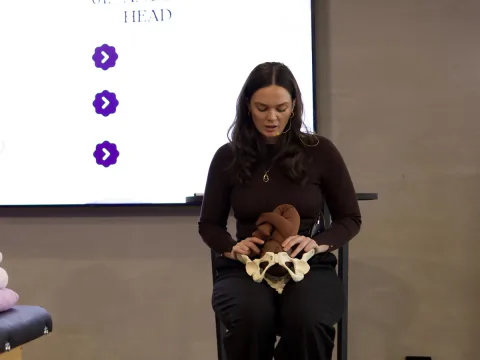
The G.Lorri™ Fetal Positioning Method teaches practising birth workers to read that space with a fascial lens and give baby more options through hands on release work.
Live online with Gabrielle Brennan Sat 7 Nov, 11am AEDT 90 minutes
Gabrielle’s live Q&A was on today Join now and the replay comes by email tomorrow morning
Your seat details and an add to calendar link are on their way to your inbox. If they aren’t there in a few minutes, check your promotions or spam folder.
Questions for the live Q&A have closed. You can still join live and ask in the last 15 minutes.
Thank you. Your question is with Gabrielle.
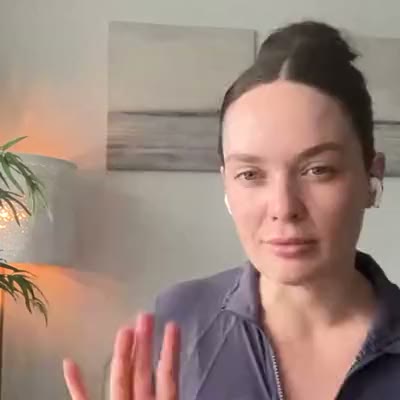
Live Q&A with Gabrielle Brennan
Sat 7 Nov
It’s a conversation about the education: what the course teaches, why it matters, and what you could take from it into your practice.
In Australia: 11am in Melbourne, Sydney and Hobart · 10:30am Adelaide · 10am Brisbane · 8am Perth. Overseas: 8am Saturday in Singapore and 1pm Saturday in Auckland. In the Americas it’s still Friday: 7pm in New York and 4pm in Los Angeles. In London it’s midnight and in Paris 1am, so send your question anyway. Gabrielle chooses from every question sent in, whether or not you’re watching live, and the replay comes to you. See it in your time zone.
Be notified for early access to course openings in February 2027, before the public in March 2027.
Your seat is saved the moment you join. There’s nothing else to sign up for.
Do it on the next screen, or from the link in any of our emails. Send one at a time, as many as you like.
The join link comes by email that morning, and again an hour before. The replay goes to everyone on the list the next day.
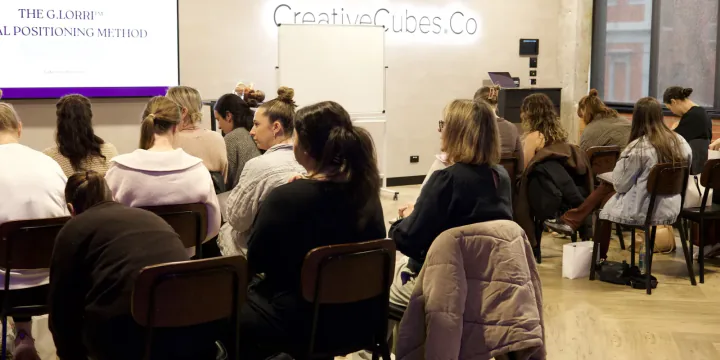
Saturday 5 December, in Melbourne
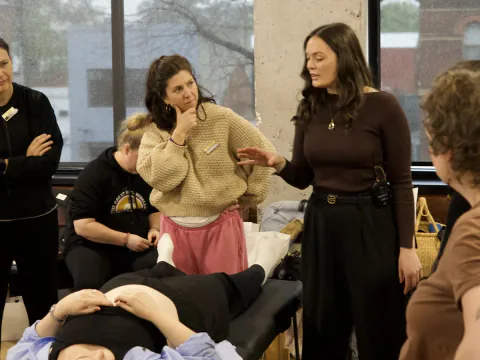
By the end of the morning, you’ll have seen the asymmetry and tension clues Gabrielle looks for, pointed out in front of you.
The Tension Clues Morning is an interactive first look with Gabrielle, not a technique class. She points out the asymmetry and tension clues that can impact fetal positioning, and one or two clues from an abdominal palpation that can point to tension in the pelvis.
Tension Clues Morning
New to birth work? The course assumes clinical experience, so it isn’t the place to start.
Pregnant and looking for support yourself? This list is written for practitioners. Our clinic is here for you: glorrilabourbodywork.com.au
Inside the course
There are six modules and 177 lessons, done at your own pace and set out in order, so each one builds on the last. The first four each end with a short quiz that opens the next: a pause to consolidate, not a test.
The pillars of bodywork, body consent, and a fresh look at the anatomy you’ll work with, from key bones and ligaments to fascia.
The biggest module, at 53 lessons. It covers postural, breathing, tummy line and stretch mark patterns, common pregnancy aches, and the clues a body gives in labour.
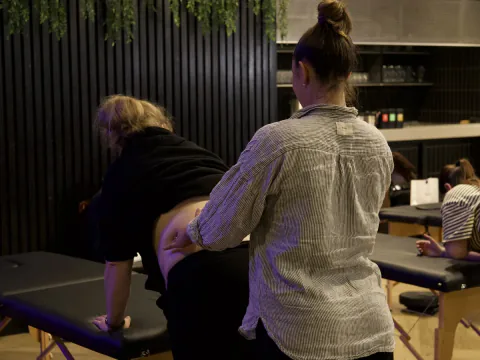
Palpating fascia, muscle, ligaments and scars, then relearning abdominal palpation, for baby and for tension, in three steps.
Six positions, each with its own release flow, the shape of a session, and how to tell whether your work was effective.
What a release feels like, techniques for 11 areas of the body, and five ligament release flows.
What to gather in a session, then 12 case studies from practice to work through.
Ask about any module or lesson. Share your insights, your fascia wins and expand your learning with likeminded G.Lorri community members.

Bring your questions to an Open Q&A, or a case to a Live Case Discussion, and work through it with Gabrielle and the group. On shift that day? The replay is up within 24 hours.
In selected tiers.

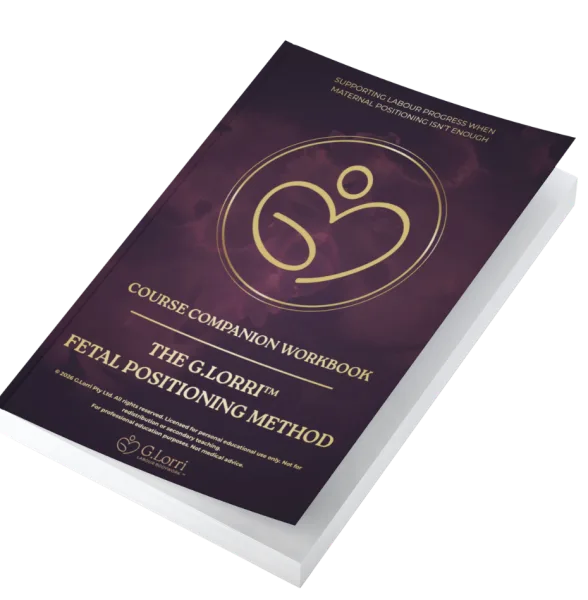
You work through it alongside Modules 1 to 6, and it holds your notes, your palpation findings and your case reflections.
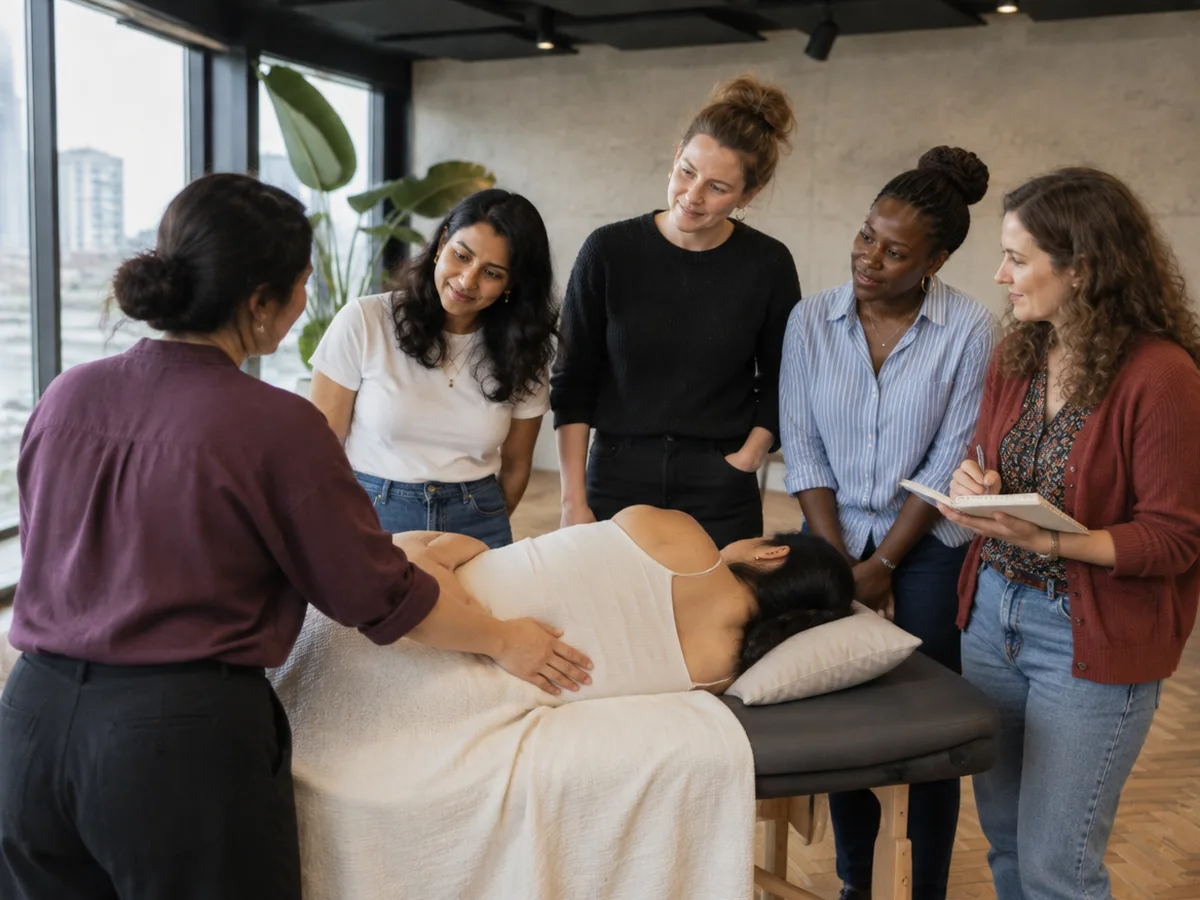
The 3 day immersive workshop in Melbourne, booked as its own option.
It all opens to the priority list first, in February 2027.

Nurse and Registered Midwife · Nearly a decade in labour care
For a long time I had a nagging feeling that something real was happening in front of me that my training hadn’t given me language for. So I kept following it, through tissue, through fascia, through what bodies were telling me when I slowed down enough to listen.
This method is what came out of that. It isn’t a replacement for what you already do well. It sits alongside it.
Sold out with 80 practitioners.
Birth workers across Australia and overseas are already on the list for February.
The G.Lorri™ Fetal Positioning Method is an online course for practising birth workers, created and taught by Gabrielle Brennan, Nurse and Registered Midwife. It teaches birth workers to read the space baby has with a fascial lens, and to give baby more options through hands on release work. The course has six modules and 177 lessons done at your own pace, a printed workbook, and an optional 3 day immersive workshop in Melbourne.
Gabrielle Brennan is a Nurse and Registered Midwife with nearly a decade in labour care, and the Lead Bodyworker at G.Lorri Labour Bodywork™ in Bentleigh, Melbourne. She created The G.Lorri™ Fetal Positioning Method from her own practice, following what she noticed in tissue and fascia that her training had not given her language for. Gabrielle Brennan teaches the course herself, answers students in the course community and runs the live calls.
The G.Lorri™ Fetal Positioning Method is for practising birth workers: midwives, doulas, physiotherapists, osteopaths, chiropractors, massage therapists, nurses and other clinicians who work with pregnant women. It is not an introductory course. It assumes clinical experience, and everything in it is meant to be used in your own practice.
The G.Lorri™ Fetal Positioning Method can be done fully online, from anywhere in the world, at your own pace. Birth workers who want hands on practice can add the 3 day immersive workshop with Gabrielle Brennan, held in person in Melbourne, Australia. The workshop is booked as its own option, on top of the online course.
The next intake of The G.Lorri™ Fetal Positioning Method opens in February 2027, to our priority list first, and to the public in March 2027. Joining the priority list at glorrimethod.com.au costs nothing and puts you among the first to enrol. The Founding Members round in March 2026 sold out with 80 practitioners.
The G.Lorri™ Fetal Positioning Method is an educational framework, not a qualification, and it does not expand a practitioner’s legal scope of practice. Students receive a certificate when they complete the course. It is up to each provider to decide whether hands on practice with pregnant clients is within their scope.
Most fetal positioning education is taught through maternal positioning and movement. The G.Lorri™ Fetal Positioning Method works through a fascia based lens: it teaches birth workers to palpate tension in tissue and fascia and read the space baby actually has, so hands on work can be tailored to the body in front of them. It does not replace other methods. It works alongside them, as another tool for when other techniques yield no response.
The live Q&A is a 90 minute online session on Zoom with Gabrielle Brennan, creator of The G.Lorri™ Fetal Positioning Method, on Saturday 7 November 2026, 11am to 12:30pm AEDT (Melbourne time). It is complimentary for everyone on our priority list, and joining the list saves your seat. Gabrielle Brennan spends about 75 minutes answering questions sent in beforehand (they close Tuesday 3 November at 11:59pm AEDT), then 15 minutes on open questions. It is a conversation about the education, not technique steps or advice about one pregnancy, and the replay goes to everyone on the list the next day.
No. Joining the priority list and your seat at the live Q&A cost nothing. The Tension Clues Morning is a paid ticket at $89, and the course has its own price when it opens in February.
Send your question anyway. Gabrielle chooses from every question sent in, whether or not you’re watching, and the replay goes to everyone on the list the next day.
Sat 7 Nov, 11am AEDT is 11am in Melbourne, Sydney and Hobart, 10:30am in Adelaide, 10am in Brisbane and 8am in Perth. Overseas it’s Saturday morning in Singapore, Saturday afternoon in Auckland and the middle of the night in London and Europe. In the Americas it’s still Friday: 7pm in New York and 4pm in Los Angeles. See it in your time zone.
When you join we ask where you’re based and which option interests you, and you can send Gabrielle your question. An email arrives with your seat details and an add to calendar link. Then a short email every fortnight or so, a reminder a week out, and two on the day. At the end of the Q&A, tickets to the Tension Clues Morning open. In December, the video of it comes to everyone on the list, and in February 2027 the list enrols first.
About once a fortnight, with a few extra around the live Q&A. Every email has an unsubscribe link at the bottom. One click and you’re off the list.
The G.Lorri™ Method teaches all hands on release techniques. This method is an educational framework, not a qualification. It is up to each provider to ascertain if hands on practice with their pregnant clients is within their scope.
Not this one, but thank you for looking. This list is written for practising birth workers, so it can’t give advice about your pregnancy. Your care provider is the best person to ask.
Still reading? Your place on our priority list is one short form away
Still have a question? Message us on Instagram.
It takes a minute to join. Your seat at Gabrielle’s live Q&A is saved straight away, and you’ll be among the first to enrol when the course opens in February 2027.